
Our Impact
The success of our partners speaks for itself: learn more about the many ways we lave left an indelible mark on fair wage standard validation, and of the more than 200 companies who have placed ‘fair wage’ as a major pillar of their sustainability strategy.
Here is a selection of updates, press and feedback shared from the vast network who have joined us in making fair wage their priority.
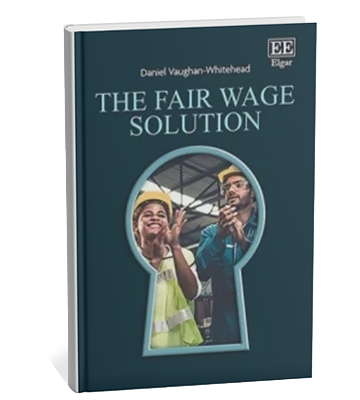
The Fair Wage Solution
Revisiting his innovative Fair Wage approach, Daniel Vaughan-Whitehead examines the critical dimensions that define equitable wages and showcases fair wage achievements in brand supply chains. Thousands of companies have already implemented this approach, benefitting more than four million workers around the world.
Vaughan-Whitehead shows how the Fair Wage concept has become a recognized methodology for improving company wage practices, leading to stakeholder-recognized international certification. He outlines the substantial wage advancements that have thus been attained in corporate supply chains, including by Unilever, IKEA, Puma and L’Oreal.
Each chapter investigates how reforms in pay systems, wage adjustment mechanisms and social dialogue can achieve vital living wage and income milestones. The book also illustrates how changing purchasing practices can enable sustainable wages and enhance working conditions globally. On a larger scale, it demonstrates how the Fair Wage approach can aid progress towards the UN’s Sustainable Development Goals, especially with regard to inequalities, poverty, vulnerability and exclusion.
This enlightening book provides a clear and practical roadmap for students and scholars of employment relations, labour policy and economics, sustainability and global supply chains. The Fair Wage Solution also brings practical insights and strategies for managers and investors to effectively implement sustainable development in their businesses. Finally, it is a crucial resource for practitioners and policymakers in economic and social institutions currently working to strengthen the global sustainability agenda.
News
Unilever declares its commitment to a living wage, and to extending that commitment to all suppliers
The industry leader demonstrates its steadfast determination through partnership with the Fair Wage Network, and vows its extention throughout its entire value chain by 2030, as reported in The TImes of India.
Weir receives certification as a global Living Wage employer
Following an extensive review, the Fair Wage Network has now awarded Weir a certification. Weir has been certified by the Fair Wage Network as a global Living Wage employer.
Using extensive research to develop and continuously update our comprehensive database of living wage rates in more than 3,000 individual regions and cities.
In the second half of 2023, Weir engaged the Fair Wage Network to assess rates of pay in all their global locations against their database.

Puma spotlights Fair Wage in their Annual Report
Since 2018, Puma has taken decisive action in demonstrating its commitment to fair wage by conducting a variety of assessments and benchmarking with the Fair Wage Network.
In this detailed Annual Report, Puma showcases the extent of this in-depth effort to validate current successes and strategize future commitments.

AstraZeneca's Living wage programme within its Modern Slavery Act
Astra Zeneca conducts an internal labour rights survey every two years. In 2024, they launched another global Human Rights Labour Review, which focused on the ILO’s core themes, including freedom of association and collective bargaining, child labour, discrimination, working hours and wages, incorporating questions about worker voice, to gain visibility of best practices.
In addition to the survey, they also analyze their wage data with the Fair Wage Network, using our 2024 data base to ensure that all Astra Zeneca employees are paid a fair wage.

Sanofi moving beyond the minimum wage towards a sustainable living wage
Faced by some weakening of minimum wage institutions in some countries, Sanofi advocates the need to move well beyond strict minimum wage compliance. It claims that Implementing a living wage fosters better health and well-being among employees and contributes positively to local economies. As a company engaged in the sector of health, Sanofi has put in place a living wage programme for its own employees that it is extending now to its suppliers.

Joint FWN-OECD Publication on the Living Wage
Rising cost of living, combined with wide wage inequalities and widespread in-work poverty, heighten the demand for a living wage.
This joint publication reviews some of the most common living wage methodologies, supported by living wage estimates produced by the Fair Wage Network, which are benchmarked against internationally comparable wage metrics and poverty lines.
This paper presents a number of critical steps to strengthen the concept of a living wage, and advises using the living wage as one of the pieces of information that – when properly contextualized – can inform wage
negotiations and wage policies set in consultation with social partners.
New research identifying the direct relationship of purchasing practices on wages
A new research and forthcoming book provide new empirical evidence on wages in global supply chains through three complementary sources of information and data: a global suppliers’ survey, 31 qualitative case studies, and a global buyers’ survey. These three sources of information collected through ILO-ETI surveys show for the first time how purchasing practices influence suppliers’ behaviour in terms of wages, working time, temporary work and outsourcing.
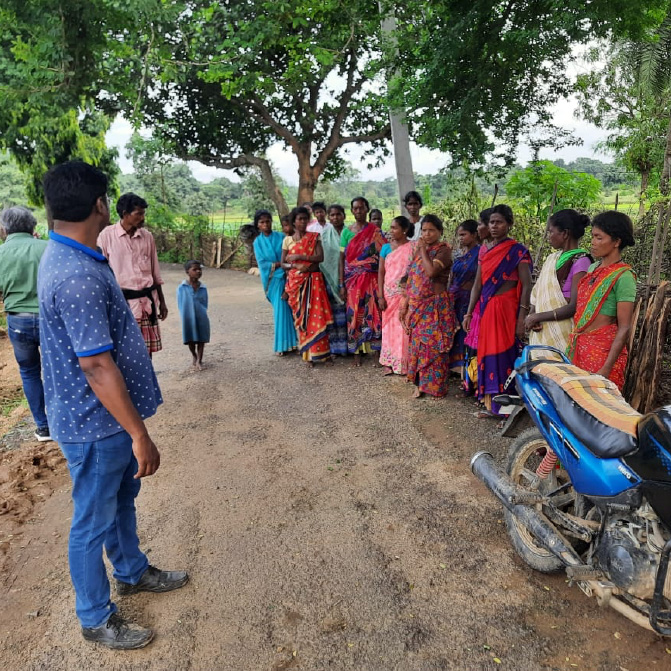
Surveys among Mica workers in India
In July-August 2021, the FWN carried out a large survey among workers collecting Mica, this shiny silicate mineral used as a thermal or electrical insulator by many sectors like automobile.

Large scale survey with the National Chamber of Italian Fashion
Fair Wage Network led a first of its kind, large scale survey, with physical visits of 45 suppliers and interviews of more than 1100 employees in all regions of Italy.
The result was a comprehensive report which fosters a better understanding the working conditions and wages of Italy’s second largest industry, with more than 500,000 workers.
Fair Wages/Living wage relevant for investors
Investors have made a call to brands to start designing a Living wage/Fair wage strategy. The Dow Jones Sustainability Index in its yearly questionnaire to companies added two questions on the living wage that are now included in companies’ sustainability scoring. Brands are requested not only to make a public commitment to pay a living wage but also to implement policies to make such living wage payment happening among direct employees but also franchisees and suppliers. Other investors are also requesting brands to put in place a strategy in this area see for instance the investors’ platform: https://www.livingwage.nl
To know more about why fair wage are important for investor and companies, read ‘Fair Wages – A key to effective social capital management’