

Case Study – Adidas
Adidas follows a global fair wage approach in its Human Resources Management Systems to monitor individual factories’ wage performance, and implement remediation when required.
Case Study – AstraZeneca
In service to its commitment to human rights and international labour standards, AstraZeneca has defined a global rewards policy aimed at paying its employees in a manner which attracts and retains talent. It also committed to pay a living wage in all its markets.

Case Study – Camera Nazionale della Moda Italiana
For the first time, a large scale survey took place in 2020-2021, just before the global pandemic, with physical visits of 45 suppliers and interviews of more than1100 employees in all regions of Italy, from the north, center and south of the country. Additional surveys were also carried out in 2021.

Case Study – CLP
CLP is committed to the payment of fair wages. Following a fair wage assessment at its Headquarters in Hong Kong in 2018, Hong Kong energy supplier CLP was found to have excellent performance in almost all fair wage dimensions, and granted the Fair Wage certification.

Case Study – H&M
In 2024, WEIR was officially certified as a global Living Wage employer by the Fair Wage Network.
This prestigious certification ensures that all Weir employees worldwide receive at least a living wage, and underscores Weir’s commitment to fair pay and inclusivity.

Case Study – IKEA
In search for coherence and sustainability, IKEA took decisive steps to place the Fair Wage methodology at the core of its different policies: of Human Resources, of Compensation, and of Sustainability. It also decided to have it applied not only for its suppliers but also for its own employees, with a series of pilot Fair Wage Assessments carried out among suppliers, service providers, stores and own industry groups.
Case Study – L’Oréal
Within its responsibility to ensure the respect of human rights in its global supply chain, L’Oréal took the commitment to pay a living wage to all its employees by the end of 2020 and to enlarge this payment of a living wage to the employees of its strategic suppliers by 2030.
Case Study – PUMA
Over the last 10 years, PUMA defined and progressively strengthened a global Fair Wage or Fair Income strategy, that is aimed at ensuring fair wage practices among its own employees and among its suppliers.

Case Study – Standard Chartered
The Standard Chartered Bank has put in place a global ‘Fair Pay’ policy that encompasses a number of Fair Wage dimensions. At the top of the list is its commitment to pay a living wage in all its markets by 2020. Reducing the gender pay gap, promoting competitive and motivating pay systems, enhancing communication on pay are other objectives pursued through its wage policy.

Case Study – Unilever
Unilever implemented a global Fair Compensation strategy directly inspired by the Fair Wage approach.
Having committed to pay at least a living wage to all its employees, Unilever became a certified Global Living Wage Employer in 2022.
Case Study – WEIR
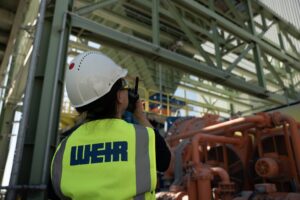
In 2024, WEIR was officially certified as a global Living Wage employer by the Fair Wage Network.
This prestigious certification ensures that all Weir employees worldwide receive at least a living wage, and underscores Weir’s
commitment to fair pay and inclusivity.